My project was the Stillwater Animal Welfare Department, a division of the Stillwater Police Department, which is located at 1710 S Main St.
What began as a simple interest in the dogs kept there, turned into an unforgettable learning experience. I hope to show with my series of pictures the people and animals of the department, which exists solely to rescue, protect and love the animals of Stillwater.

A puppy taken in that day to the shelter enjoys his new, clean cage but wasn't in the mood for pictures. He was adopted about a week later.

The shelter at Animal Welfare is unique in that there are two shelters located in the same complex.
The Karen Kay Mullendore Municipal Animal Complex also houses the organization, the Humane Society of Stillwater, giving Stillwater citizens two places to adopt pets in the same location.
People, volunteers and potential pet-owners are encouraged to visit both shelters. Dogs can be taken out of their cages with a provided leash to walk and play around the land located behind the shelter.

A volunteer enjoys the shade of a tree with Gentry, a black lab, who was adopted from Animal Welfare.

Hills and green grass cover the land behind the buildings providing more than enough space for dogs to run and play with volunteers and those considering adopting.

Bella, an Australian Shepherd and Blue Heeler mix, enjoys the shade of a tree in a designated play area that lets animals be taken off the leash.

A bulletin board outside of the Animal Welfare office posts information about lost and found animals in Stillwater. As seen here, unfortunately more dogs are lost than found.

An Animal Welfare officer answers a call about a noisy, stray cat at an apartment complex. He was taken to the shelter that day.

The officer comforts the kitten before she places him in the cage she cleaned and prepared for him.

Despite his safer, new home, he continued to meow until given food. He was adopted about two weeks later.

Dogs' cages are kept clean and always with water to drink. Information about the dog's sex, age, name, etc. is kept outside of the cage for visitors to see.

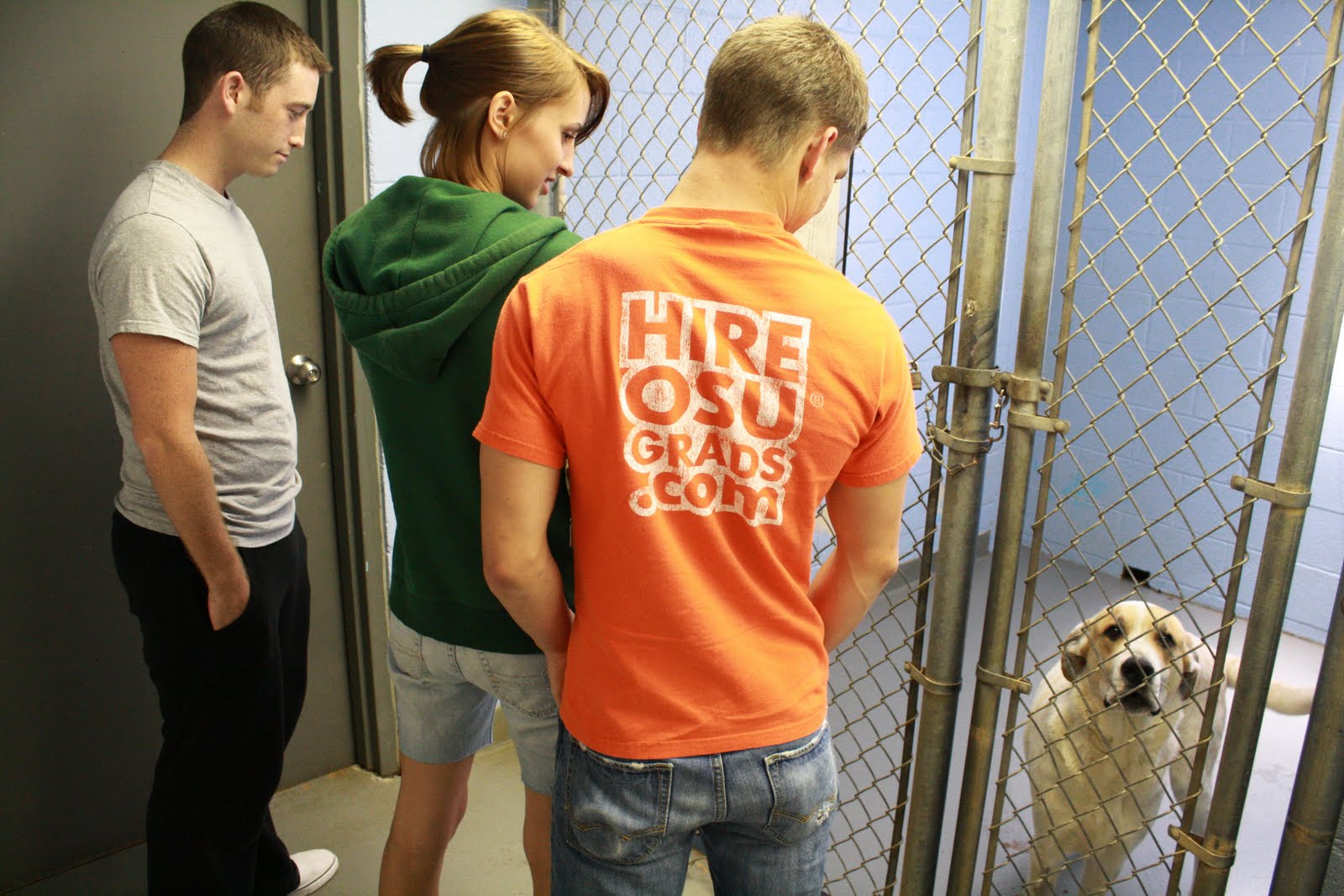
A few potential pet-owners browse through the dog runs, which house about 12 different dogs of all different breeds.

Two puppies try to convince a visitor browsing through the dog runs that they are worthy of being taken home. Most of the dogs get loud and excited the minute anyone enters the dog runs.

Veterinarians frequently visit Animal Welfare to administer check-ups on the animals.

Shots are given to keep the dogs healthy and prepare them for adoption. While one administered the shots, the other veterinarian held him down but consoled and petted him throughout the process.

The two veterinarians and a volunteer inspect lesions found on the dog's paws and discuss how he might have gotten them.

An Animal Welfare officer picks up a trap set out for stray cats at a deserted house in Stillwater. The traps don't hurt the animals but only contain food to capture the animal so they can be brought safely back to the shelter.

A cage is prepared for the captured cat with water and food.

The Animal Welfare vehicle can seat two in the front and hold several cages for animals in the back. Stillwater residents react to seeing the vehicle usually by a wave of gratitude. Many people have the wrong idea of what it is the officers do and assume they are there to capture and kill animals. This is very untrue.
"I don't catch dogs; I catch owners," said one officer.
The Animal Welfare Department's mission is "to provide immediate response to emergencies concerning animals within the city limits to attempt apprehension, in a safe, humane manner, any dog, cat or other domestic animal or fowl that has become a nuisance, or is a threat or danger to any citizen in Stillwater. Stillwater animal welfare officers are also charged with the protection of animals from inhumane treatment in the City of Stillwater, Oklahoma."
Contact for more information or inquiries: 405-372-0334
animalwelfare@stillwater.org


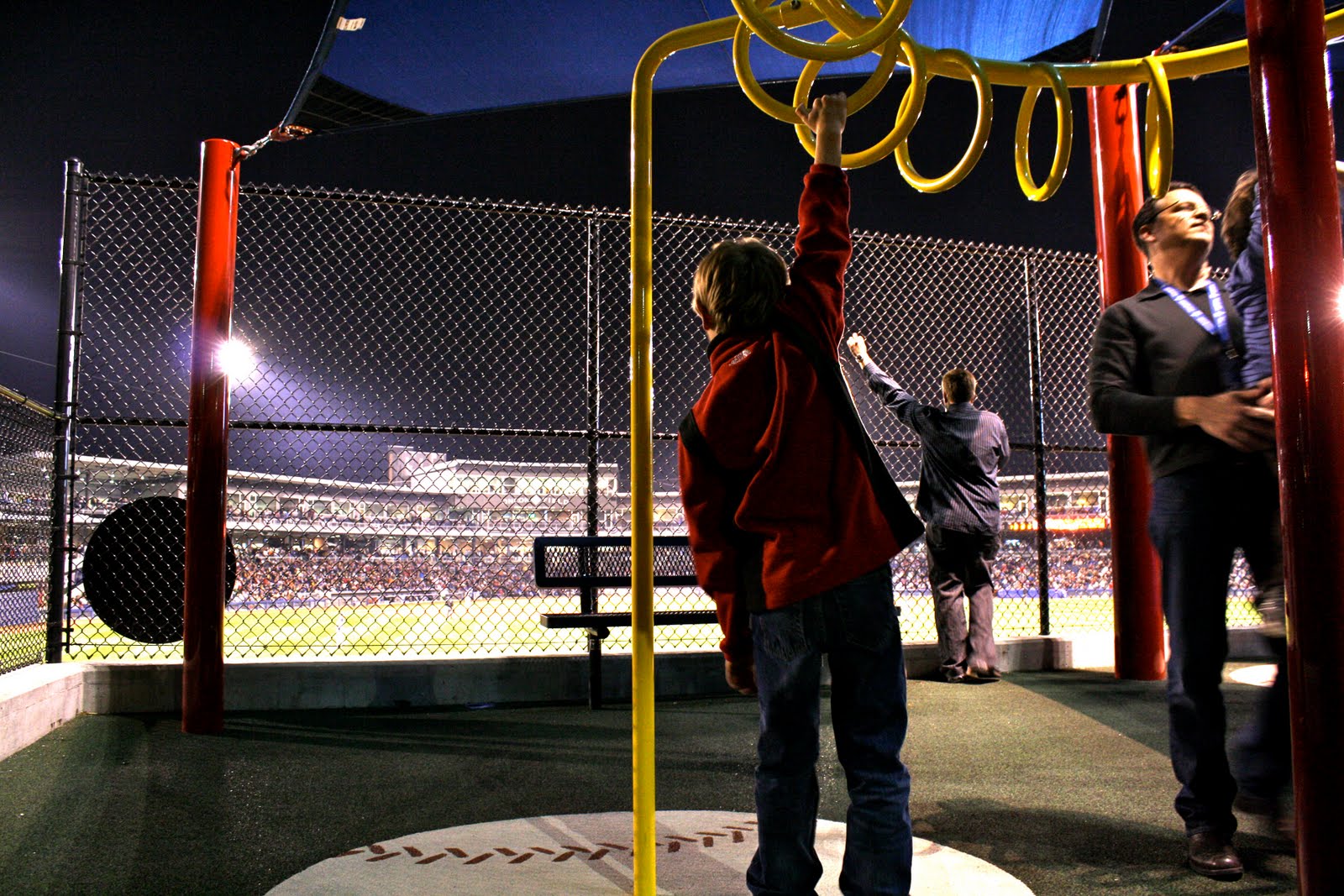
 Kids watch from the lawn as pitchers warm up in the bull pen.





 A stretch of the I-35 highway that leads southbound into Norman. The Haskell Lemon Construction Company has been working on widening the lines for almost two years.
 A milling machine digging into the road and spitting the asphalt into a dump truck. The milling machine costs roughly one million dollars.